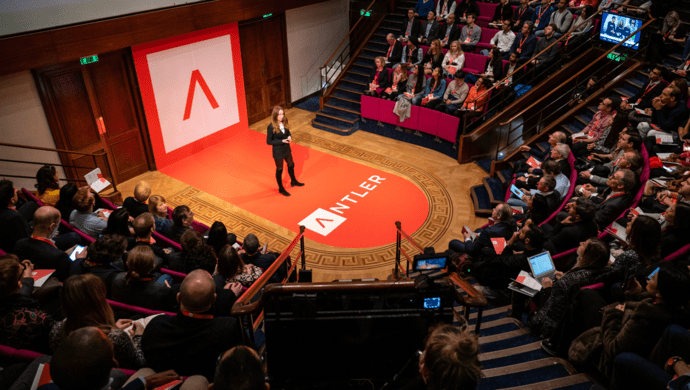
Antler is doing something most early-stage VCs avoid: putting specific numbers in the room. Seven-digit ARR in eight months. Six-figure contracted revenue in ten. Those are not modest claims for inception-stage bets, and Jussi Salovaara is clearly aware that the burden of proof sits squarely with him. The “One Asia” framing is the most intellectually honest part of the pitch. Rather than pretending Korea, Japan, and Southeast Asia share a common startup culture — a lazy assumption many pan-regional funds make — Antler acknowledges the friction and argues its 27-location network is the mitigant. Whether that infrastructure actually de-risks localisation at speed is something only portfolio outcomes over the next two to three years will settle. The China-outbound thesis is the sharpest edge in this interview. Salovaara’s reframe — where is your customer, where is your data, where is your team — is a clean way to separate geopolitical risk from technical talent. It will not satisfy every LP, but it is a more rigorous answer than the usual handwave. The real test arrives if the AI spending correction materialises. Domain-specific, ROI-proven tools should survive. Hype-adjacent ones will not. Antler is betting its portfolio falls firmly in the first camp. REGIONAL Carousell turns EBITDA-profitable in 2025 on secondhand sales surge: The Singapore-based recommerce platform reached EBITDA profitability for the first time, driven by strong growth in secondhand goods transactions — a milestone that strengthens its IPO narrative. B Capital closes US$500M early-stage fund, earmarks 20% for Asia: The fund sets aside a significant slice for Asian markets, signalling continued appetite for early-stage bets in the region despite a cautious global venture climate. Sociolla eyes Singapore IPO listing this year: The Indonesian beauty e-commerce platform is targeting a Singapore Exchange listing in 2026, joining a growing queue of Southeast Asian consumer tech firms pursuing public markets. BSQ forms US$300M AI venture in Singapore: Singapore-based investment firm BSQ is backing the new AI-focused venture with US$300 million, targeting opportunities across enterprise and deep tech in the region. M-DAQ integrates with Vietnam’s MeTech for ASEAN payment hub: Singapore fintech M-DAQ’s tie-up with Vietnamese payment service MeTech aims to build a cross-border payments corridor connecting Southeast Asian markets under a single infrastructure layer. Malaysia’s Boost launches agentic AI banking platform: The Malaysian fintech’s new platform autonomously handles 90% of customer enquiries, marking one of Southeast Asia’s most advanced deployments of agentic AI in consumer finance. XTransfer opens Malaysia office as SEA strategic hub: The Chinese B2B cross-border trade payment platform is using Kuala Lumpur as its regional base to expand into Southeast Asian markets amid growing trade corridors. Thailand secures US$4.1B in EV supply chain investment: Commitments from Chinese, Korean, and Japanese firms signal Thailand’s emergence as a regional EV manufacturing hub, with foreign capital flowing into battery and component production. Malaysia’s EV push shifts focus to localisation: Import restrictions are reshaping Malaysia’s EV market, pushing automakers to establish local production rather than rely on imported vehicles, in a direct challenge to Chinese EV dominance. Anchanto eyes full-year EBITDA profit and market expansion: The Singapore-based e-commerce logistics firm is on track for full-year profitability and is charting entry into new Southeast Asian markets as it scales its warehousing-as-a-service model. SEA’s US$3.75B June funding rebound hides a narrow recovery: Tracxn data show the US$3.75B haul came from just 17 rounds, with a handful of outsized deals driving 1,572% month-on-month growth rather than a broad-based rebound. Teo, Grab’s Tan join new UN-linked AI for Good Commission: Singapore’s digital minister and Grab’s CEO are among 40+ founding members of a body co-chaired by Rwanda’s president and Salesforce’s Benioff, aimed at bringing 2.2B offline people into AI. HeyMax lets users draw a million miles before they earn them: The Singapore loyalty app’s new product front-loads redemption value, betting members will keep earning to cover miles drawn early, a model still unproven at scale. Transcelestial, Warpspace to test cross-vendor laser links: The Singapore-Japan tie-up targets a commercial sticking point for space data networks: whether optical satellite systems from rival vendors can actually talk to each other. Vietnam’s AI builder scene is outgrowing its hackathons: Repeated visits since 2024, including March’s Lotus Hacks, convince the writer Vietnam’s developer community is maturing past one-off events into a durable AI builder base. Interviews & Features Antler bets on Chinese founders building outside China: Co-founder Jussi Salovaara tells e27 the early-stage VC can show demo-to-dollar traction inside a year, betting Chinese talent building abroad outperforms the AI hype cycle. INTERNATIONAL Uber CEO Khosrowshahi resigns, exits Grab’s board: Dara Khosrowshahi’s departure from Grab’s board ends a strategic tie-up era between the two ride-hailing giants; it raises questions about the future of their regional coordination. Nearly 40 new unicorns minted globally so far in 2026: The tally of new billion-dollar startups this year points to a selective but recovering venture market, with AI companies dominating the cohort. Microsoft cuts nearly 5,000 jobs across Xbox and sales units: The layoffs span Xbox and commercial sales divisions, reflecting ongoing restructuring as the company realigns around AI-driven products and services. Tech layoffs tracker: employers increasingly cite AI in 2026: A running tally of major tech job cuts shows AI-driven automation is now the most commonly cited reason for workforce reductions across the industry. Station F ramps up as Europe’s AI startup launchpad: The Paris-based campus is doubling down on AI, positioning itself as the go-to accelerator for European founders building foundation models and AI applications. Uber’s European expansion plans hit regulatory speed bump: Proposed expansion into new European markets faces pushback from regulators and incumbent transport operators, complicating the company’s post-Khosrowshahi growth strategy. Trump memecoin investors lost US$3.8B, analysis finds: A financial analysis reveals that retail investors in the Trump-branded memecoin suffered collective losses of US$3.8 billion, reigniting debate over political celebrity tokens and investor protection. Alibaba bans staff from using Claude Code internally: The Chinese tech giant has prohibited employees from using Anthropic’s coding tool, reportedly over data security concerns, a move that highlights rising tensions around AI tool governance in large enterprises. WhatsApp gets more time to respond to India username notice: Indian regulators extended the deadline for Meta’s WhatsApp to reply on its proposed username feature, with the company assuring no rollout until regulatory discussions conclude. CYBERSECURITY US cyber agency uses Anthropic’s Mythos to audit its code: CISA’s Attack Surface Evaluation team is scanning government repositories for bugs foreign spies could exploit, sources told Reuters, even as Anthropic’s ties with Washington stay tense. AI could plug cybersecurity’s persistent talent gap: The writer argues accessible AI tools, not more certifications or training programmes, are the realistic fix for an industry that has failed for years to close its skills shortfall. First AI-run ransomware attack still required human input: A landmark AI-executed ransomware campaign was unable to operate fully autonomously, revealing current limits of AI in cyberattacks, but raising urgent questions about near-future threat escalation. Harnessing AI to stay ahead of AI-driven cyber threats: Companies are increasingly deploying AI-powered defences to counter AI-generated attacks, but the piece warns that without governance frameworks, the security arms race will accelerate asymmetrically. SEMICONDUCTOR LG Innotek to build US$1B substrate plant in Vietnam’s Hai Phong: The Korean components maker will break ground in Q3 2026 on a semiconductor substrate facility, deepening Vietnam’s role in the global chip supply chain. Samsung adds US$1B to Vietnam investment, total hits US$24B: The Korean electronics giant’s additional US$1 billion commitment underscores Vietnam’s strategic importance as Samsung’s largest offshore manufacturing base globally. Taiwan’s Unimicron seeks up to US$1.4B in share offering: The chipmaker’s capital raise will fund expanded substrate capacity at a time of surging demand driven by AI chip packaging requirements. Jensen Huang’s GTC Taipei blitz masks a bigger AI bet: Beyond the Vera Rubin platform, standalone Vera CPU and humanoid robotics stack, Nvidia’s real wager is that AI agents themselves become paying customers of compute. AI AI’s real bottleneck is organisation design, not capability: Drawing on how Anthropic, Meta, Block and Klarna deploy AI, the writer argues executives are asking the wrong question — not whether to use AI, but how fast to cut headcount once it performs. Don’t bet your AI budget on a single winner, writer argues: No AI tool wins at everything, the writer contends, so Southeast Asian businesses spreading spend across several vendors will outlast those that commit early to one platform. Self-driving startup Turing gets AMD backing, adopts AMD GPUs: AMD’s investment in autonomous vehicle startup Turing signals a deepening competition with Nvidia in the AV chip stack, with Turing committing to AMD’s GPU architecture for its systems. THOUGHT LEADERSHIP Tether’s former CIO plans to sell stake in stablecoin giant: The planned divestiture by Paolo Ardoino’s predecessor offers a rare window into Tether’s opaque ownership structure and could trigger renewed scrutiny of the world’s largest stablecoin issuer. Yonhap: Korea’s latest economic and trade developments: South Korea’s economic positioning vis-à-vis Southeast Asia remains a key variable for regional investors tracking Korean capital flows and manufacturing partnerships into markets like Vietnam and Indonesia. The first-mover myth: why being early rarely wins: Drawing on cases from the industrial age to today’s startups, the writer argues execution, timing and adaptability matter far more than simply arriving first. Why reach doesn’t equal credibility in the creator economy: Audience and business feel identical when things go well, the writer warns, but confusing attention with an actual asset is a trap content creators keep falling into. Bangladesh’s startup scene enters a new investability phase: Digital behaviour is visible across payments, commerce and health, but the real question is whether capital can enter, scale and exit with predictable governance. The post Ecosystem Roundup: Can Antler’s “One Asia” thesis survive the AI hype cycle? appeared first on e27.
Author: Sainul
Source: e27